A Photo Essay From the Air
All images taken by Glynn Wilson in the Chandeleur Islands off the coast of Louisiana and Mississippi in and around the Breton National Wildlife Refuge, especially in Shoalwater Bay in Chandeleur Sound. You can zoom in on Google maps in a separate tab or window to find them. Many of these islands are unnamed, although perhaps we can name them now. How about BP Oil Slick Islands, since this is where the first landfall impact occurred? (The Earth version of Google actually calls one section of these North Islands and the other New Harbor Islands).
Click on the images for a larger view…
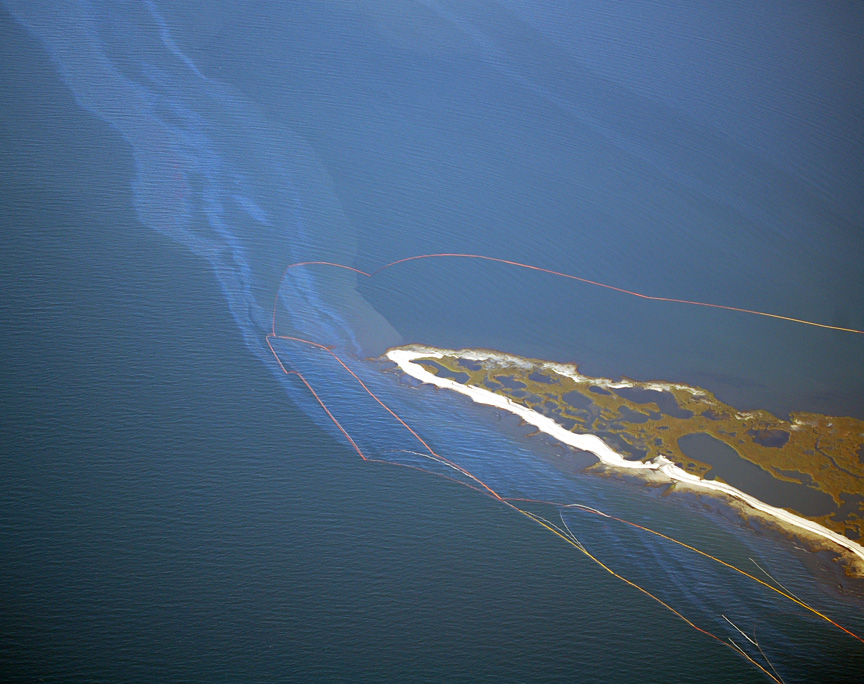
The oil slick from British Petroleum’s Deepwater Horizon rig, still spewing 210,000 gallons a day into the Gulf of Mexico, making landfall along the barrier islands off the coast of Mississippi on Friday, May 7, 2010. Notice even the double booms being deployed on that part of the coast are not stopping the advancing leading edge of the rainbow sheen mixed with chemical dispersants, followed by miles and miles of emulsified oil. (We believe this is part of the North Islands).
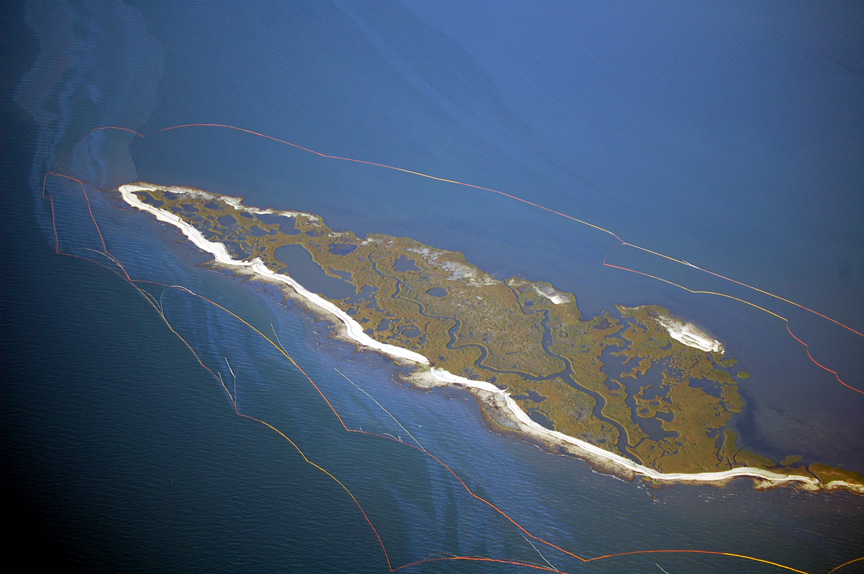
On Friday, the tide was pushing the slick east and the wind was coming in at 10-15 miles per hour from the Southwest, gradually pushing the slick to within about 26 miles of shore, just out of sight from the beach. But the wind turned around and changed on Saturday. With a cool front coming out of the northwest, the slick is likely being pushed offshore from Alabama and gradually toward Florida. This makes clear the booms won’t work, if it turns around again and heads inland with some wind and waves. (We believe this is part of the North Islands).
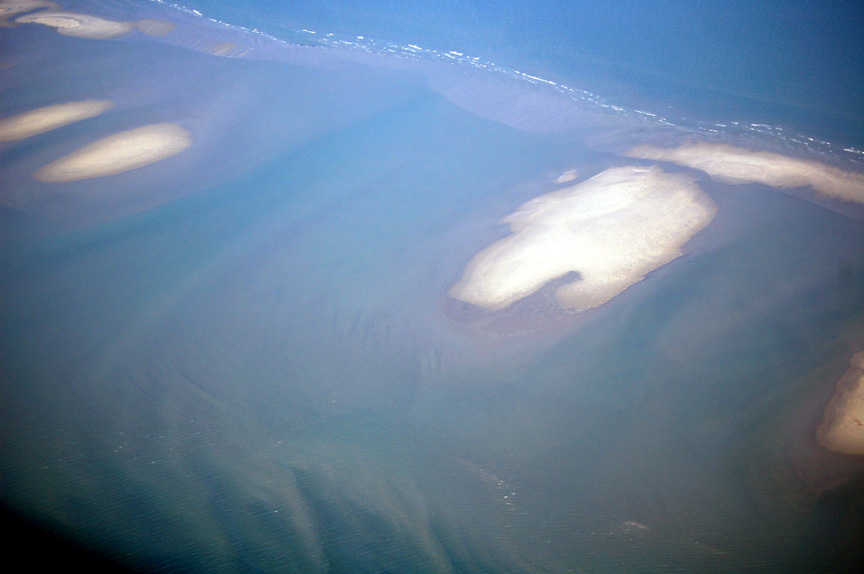
Once the oil moves on the currents past the islands and closer to the mainland, it appears to be sinking to the bottom in places, right into the shrimping grounds and oyster reefs.
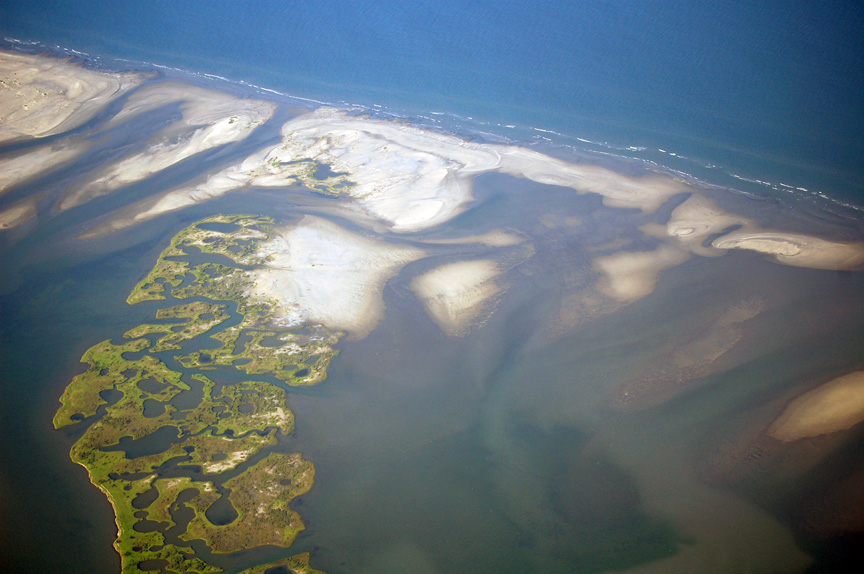
Notice the vegetation just inside the islands, at risk from the encroaching oil.
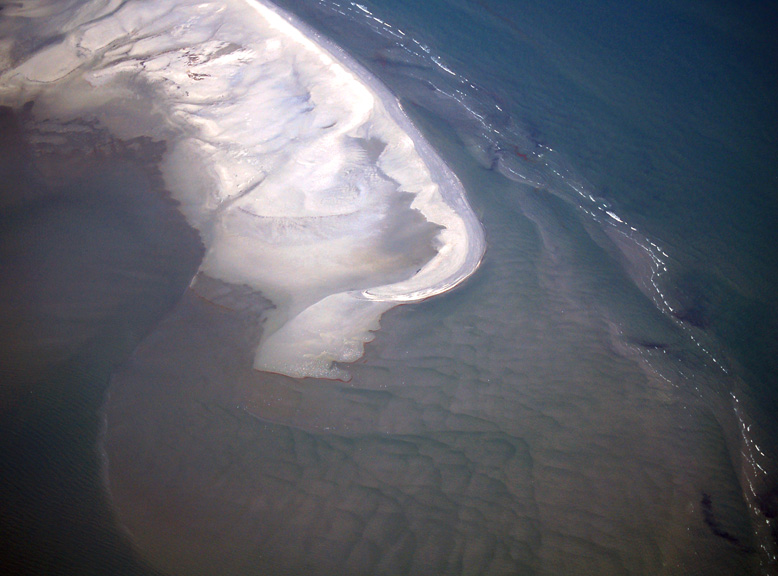
Here the oil and chemicals surround the spit of land like a deadly juggernaut. I have not yet seen a plan that will get rid of this, except the relentless forces of nature over time…
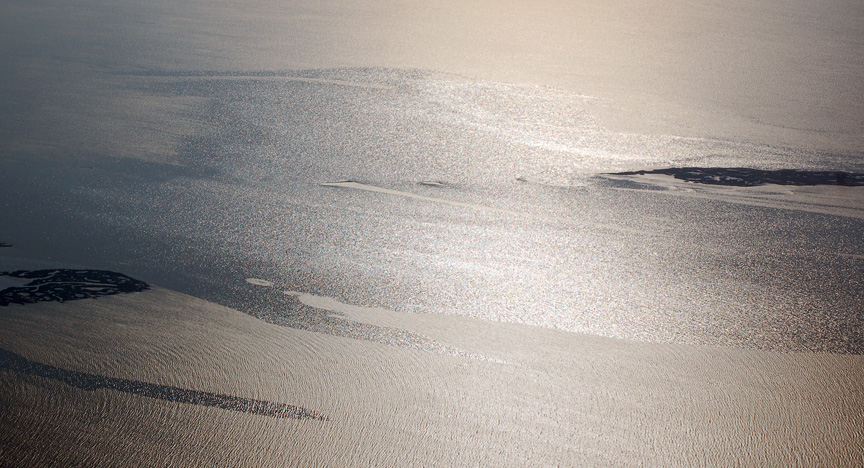
Back out in the Gulf of Mexico south of the islands, looking into the afternoon sun, you can see the blue-black sheen as far as the eye can see. Estimates have it covering 2,300 square miles of the Gulf.
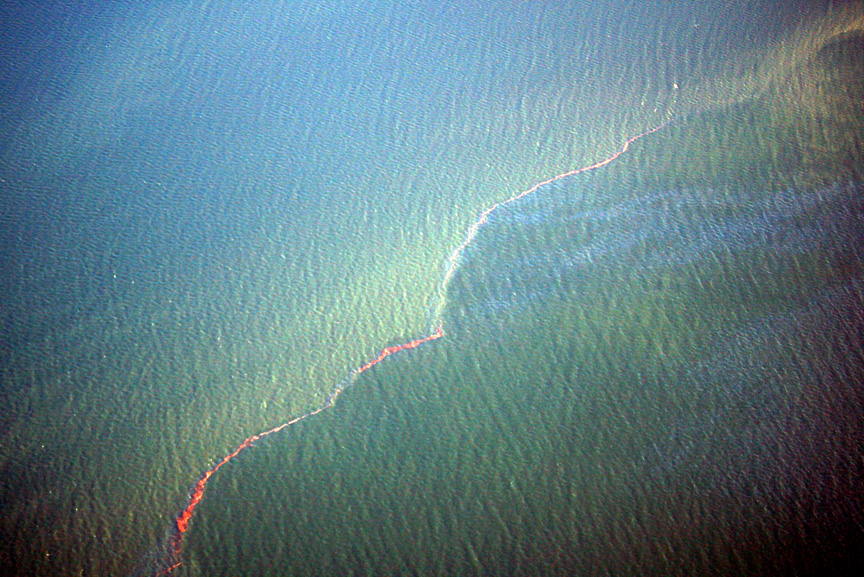
The leading edge of the rainbow sheen is unmistakable…
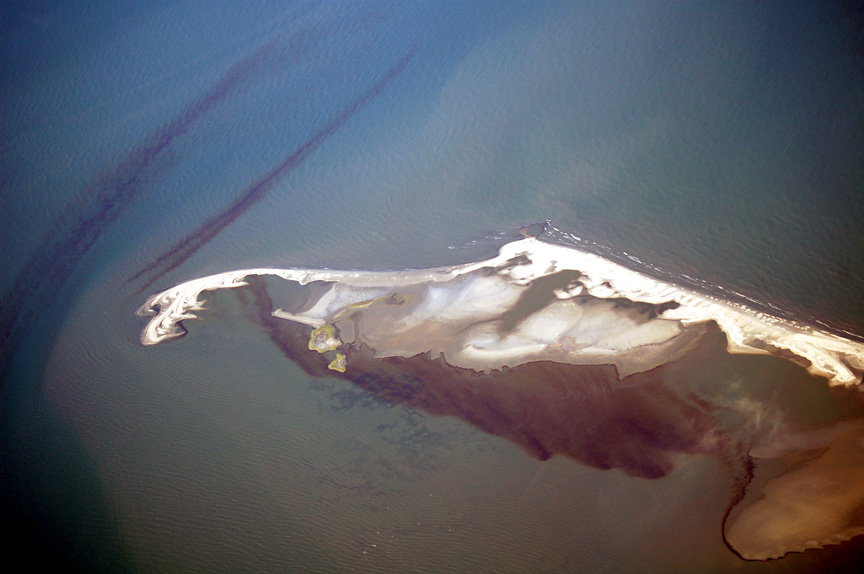
Oil mixed with chemicals started hitting the island beaches on Wednesday, and by Friday, the islands were surrounded by the spill making its treacherous march toward the mainland. (We believe this is part of the New Harbor Islands, inshore from the Chandeleur Islands).
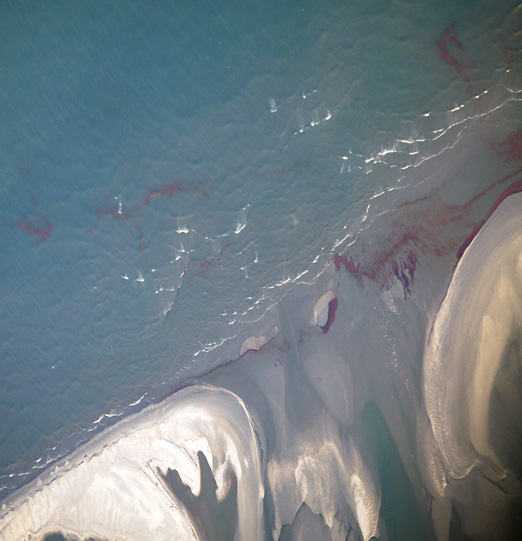
The oil tends to head for the gaps in the islands with the current. (We believe this is part of the New Harbor Islands, inshore from the Chandeleur Islands).
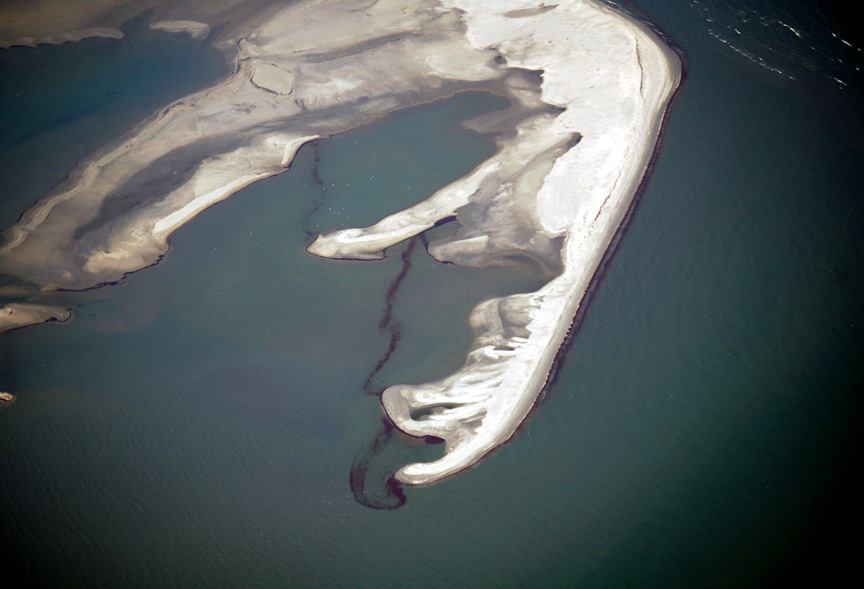
Then wrap around to the inshore side and sink to the bottom or wash up on the beach. (We believe this is part of the New Harbor Islands, inshore from the Chandeleur Islands).
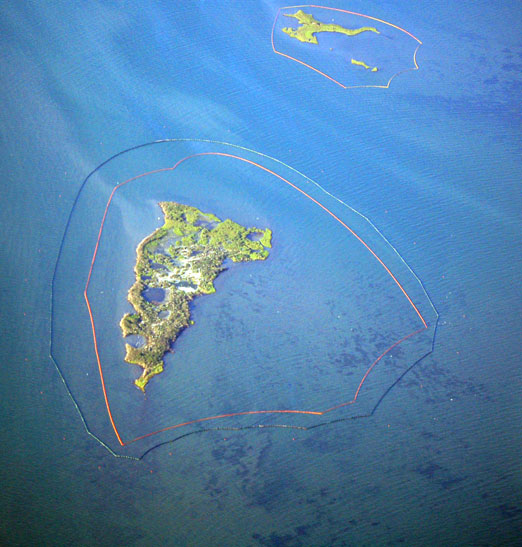
A couple of small islands covered in vegetation off the coast of Mississippi still surrounded by booms. If you look close, you can see the rainbow. There is no pot of gold at the end of this one.
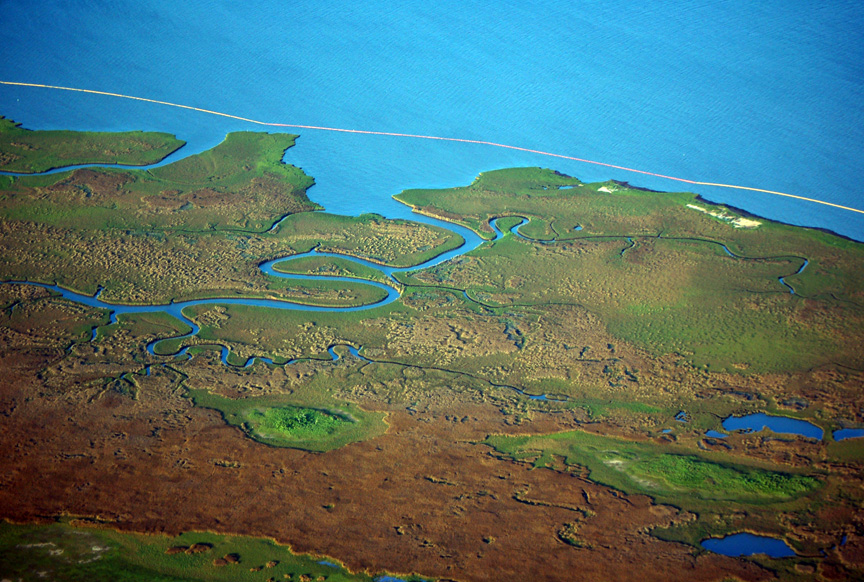
This shows the beauty and grandeur of the Mississippi Delta before the oil reaches it. It is here, where the fishes and the birds and all manner of earth’s creatures are born and raised. If this spawning ground is spoiled, the devastation will be incalculable.
© 2010 – 2016, Glynn Wilson. All rights reserved.