Glynn Wilson
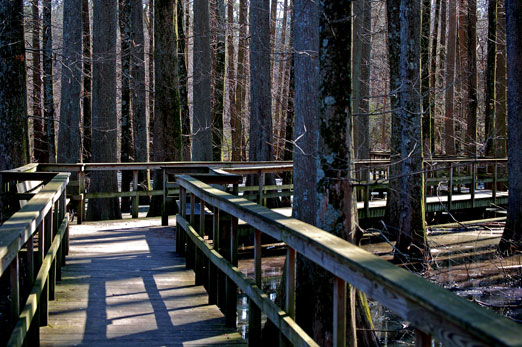
A boardwalk leading through an ancient bald cypress swamp…
On the way back from the Tennessee Riverkeeper fund raiser in Decatur and camping at Point Mallard, I stopped by the Wheeler National Wildlife Refuge on the way back to Birmingham. Unfortunately, the visitor center observation building is set up for looking through glass with no outside access allowed for wild bird photography, but the nature walk over the boardwalk into the bald cypress swamp was a perfect way to spend part of a sunny February day outside.
According to the official federal Website, the refuge was established in 1938 to provide habitat for wintering and migrating birds. Considered the easternmost Refuge in the Mississippi flyway, this 35,000 acre Refuge attracts thousands of wintering waterfowl each year and supports the southernmost and Alabama’s only significant concentration of wintering Southern James Bay Canada geese. It also serves as winter habitat for the State’s largest duck population, including the signature green and red of the mallards.
In addition to migratory birds, the Refuge hosts 115 species of fish, 74 species of reptiles and amphibians, 47 species of mammals, and 285 different species of songbirds. The refuge is also home to 10 federally listed endangered or threatened species.
The refuge, located along the Tennessee River near Decatur, was named for Major General Joseph Wheeler. Of the 35,000 acres, according to Wikipedia, about 4,085 acres are located within Redstone Arsenal. Approximately 1,500 acres of the Redstone Arsenal land is administered by the Marshall Space Flight Center. The facility has a 16 person staff with a $1,694,000 annual budget.
Wheeler is charged with the administration of four other National Wildlife Refuges including Fern Cave, Key Cave, Sauta Cave and the Watercress Darter National Wildlife Refuge. Until recently, Wheeler also administered the Cahaba River National Wildlife Refuge (now administered by the Mountain Longleaf National Wildlife Refuge).
Glynn Wilson
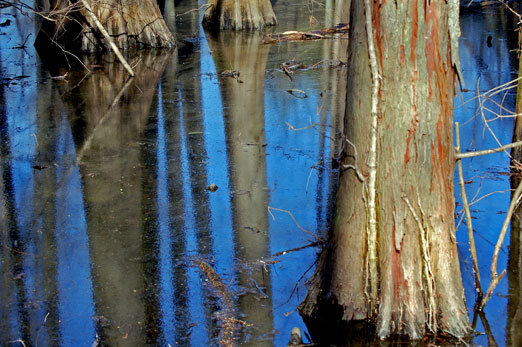
The Wheeler National Wildlife Refuge is comprised of a great diversity of habitat types such as bald cypress swamps, bottomland hardwood forests, wetlands, pine uplands, agricultural fields and backwater embayments. These habitats provide excellent feeding, loafing, and roosting sites for waterfowl, as well as nesting sites for migrating songbirds.
© 2010 – 2016, Glynn Wilson. All rights reserved.