At Least 1,000 Endangered Watercress Darters Killed

September 23rd, 2008

Illegal Dam Removal in Roebuck Springs Under Investigation

roebuck_springs4.jpg
Glynn Wilson
The scene of destruction at Roebuck Springs on Village Creek, where at least 1,000 endangered fish were killed by the illegal removal of a dam.

by Glynn Wilson

ROEBUCK SPRINGS, Ala., Sept. 23 — Ignorance kills.

Regina Nummy, the director of Roebuck-Hawkins Park, apparently took it upon herself to authorize a crane operator (not a backhoe as previously reported) to dig its way into a protected pond on Village Creek last Friday and destroy a dam, without contacting federal or state officials for a permit or permission of any kind. The incident appears to be a clear violation of the federal Endangered Species Act, resulting in the death of at least 1,000 endangered watercress darters.

On the crime scene behind the tennis courts in East Birmingham Tuesday, along with a U.S. Fish and Wildlife Service investigator and two Alabama Department of Conservation officers, attorney Mark Martin of the Black Warrior Riverkeeper environmental group indicated that whoever authorized the destruction of the dam should be prosecuted.

Getting rid of the dam was a “significant and dangerous draw-down” of the water level that clearly killed the fish, he said. “It looks like a criminal act to me. I think it should be prosecuted.”

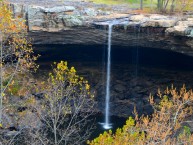
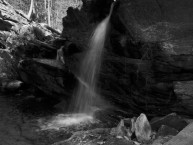
A family of beavers built a dam last summer on top of a man-made rip-rap berm as part of the storm runoff drainage system designed for the development, creating a small waterfall which led to a drainage pipe. From there Village Creek cuts through Roebuck Golf Course on its way southwest. Both the natural and artificial barriers were clearly removed with heavy equipment judging by tracks in the stinking mud left behind.

Without knowing what they were doing, the workers who destroyed the dam killed at least a thousand endangered watercress darters and thousands of snails important to science and the ecosystem.

But the decision resulted in a vibrant creek and pond of about 50 yards wide and 100 yards long, leading to an old grist mill and water tower by the old boys reform school, being reduced to a trickle and a puddle by Monday, with dead fish and snails stranded in the mud and grass.

A federal wildlife biologist and two state biologists were surveying the scene on Tuesday, taking measurements and gathering samples of dead species. The feds focused on the endangered darters, while the state officials collected snails.

Rob Tawes, supervisor of the Fish and Wildlife Service’s Daphne Field Office, and the federal investigator on the scene, told me Tuesday the agency is seriously looking into the fish kill.

“We’re in fact-finding mode. It’s something that we’re extremely concerned about,” Tawes said. The agent on the scene declined to be identified or interviewed, but said the Atlanta field office would be putting out a statement soon.

roebuck_pond2.jpg
Glynn Wilson
Thomas Tarpley and Michael Buntin with the Alabama Department of Conservation examine dead snails in the mud left behind from the illegal dam removal.

Michael Buntin, an investigator with the state Conservation Department, said the site is an important place where endangered wildlife can survive in the heart of an urban area. The creek and pond are surrounded by a golf course on one side, a road leading to a juvenile detention facility on another, and tennis courts, a community center, and a parking lot.

“It shows that nature can survive even in the middle of a city, until something like this goes wrong,” he said. “It looks like the draw-down of the water by the removal of the dam caused a serious impact to me. It’s certainly a surprise that this would be allowed to happen considering the importance of the site.”

The darters themselves, bright blue and spotted with red and orange when alive, and known to exist only in four locations around Birmingham, had fled into the grasses upon the shock of rushing water flowing out of the pond, dooming them to die when the grasses dried up. Scientists say they may have lived if they had gone with the flow downstream, but that is not their nature. When threatened, they hide in the grass.

“Watercress darters thrive in spring pools,” Bernie Kuhajda, manager of the fish collection at the University of Alabama, told a reporter for The Birmingham News. “This was the ideal habitat for them.”

watercressdarter1.jpg
Dr. Patrick O’Neill, Fishes of Alabama
A rare watercress darter, etheostoma nuchale, unique to Birmingham.

Ms. Nummy admitted to the News reporter that she authorized the dam’s removal without consulting federal authorities, claiming the pond has flooded the park’s tennis courts in the past.

Yet I play golf there regularly and periodically check in on the family of yellow-crowned night herons that nest nearby and have never seen the water rise over the tennis courts. And there is no evidence that “thousands of dollars” in damages have been repaired as a result of this alleged flooding, as she told the News.

Ms. Nummy, who was not in her office Tuesday and was reportedly in a meeting downtown for most of the day, told the News it “never crossed [her] mind” to consult the U.S. Fish and Wildlife Service or anyone else.

“I did not realize it was an issue until [a USFWS official] called a little while ago,” she reportedly said.

Don Lupo, of the Mayor’s Office of Citizens Assistance, told the News the city has been committed to protecting the darter, including posting signs along the spring below the pool notifying everyone of a ban on pesticides near the water. But on Monday, he was not aware that the dam removal had killed any darters.

“We have orders not to get into that creek and not to do that stuff,” he said.

Causing the death of fish listed as endangered species under federal law is punishable by fines of up to thousands of dollars for each one killed, which is one of the reasons the feds collected as many as possible. Criminal charges may also be brought against individuals involved in the fish kill.

It is not yet known who operated the equipment that destroyed the dam, whether it was city workers or contracted out to a private operator. But one investigator on the scene said that will be looked into as part of any national or local investigation.

roebuck_pond1b.jpg
Glynn Wilson
The same scene at Roebuck Springs on Village Creek earlier this year.

For more photos, check out this slide show. Look for the icon that makes it pop up in full screen mode for the best viewing. Use the mouse to roll over the text to read the full cutline.